
Sunday Reflections (2026 Agritech Predictions, Agritech IPO Contenders, Rice Conservation, Tender Coconut)

Dear Friends,
Greetings from Hyderabad, India. Welcome to Sunday Reflections where I reflect on what I’ve written and ask myself, In doing what I am doing, what am I really doing?

<Subscriber-Only> Green shoots and 2026 Agritech Predictions
The agritech ecosystemic grapevine is buzzing. From offline edtech models for B.Sc Agri graduates stuck in the government-job-or-sales-job trap, to agri-input firms eyeing a ₹12,000-15,000 crore AdBlue opportunity hiding in plain sight at highway petrol pumps.
Agrivoltaics has finally hit escape velocity. And yes, agentic AI agritech ventures (Ex-Jiva?) are coming for the contentious retailer-manufacturer relationship.
I also reconcile my 2023-2025 predictions. The government’s stealth approach to agricultural income taxation: Building surveillance infrastructure first, taxing later. The fertilizer DBT-to-farmer-accounts. And the “Great Hedge” between digital-consolidation states and real-consolidation states?
More in a recent subscriber-only edition of Krishi.System.
<Subscriber-Only> Meet the Indian Agritech IPO Contenders
It has been raining IPOs in India. Captain Fresh, Samunnati, Arya.ag, Ecozen and Milky Mist are among the top contenders for the Indian Agritech IPO race.
When I look at the leading contenders, the broader pattern that is emerging is this:
The agritech sector is bifurcating into “Asset-Light Marketplaces” and “Asset-Heavy/Enabler Infrastructures.”, depending on the capital efficiency and the amount of operational control they have towards their supply chain.
Those who have cracked this asset-light/asset-heavy debate are those who have discovered the golden mean of asset control. Either through ownership of IP (as in the case of Ecozen) or critical infrastructure (as in the case of Captain Fresh and Milky Mist) or through ownership of trust and relationship layer (as in the case of Samunnati and Arya.Ag).
You either own the critical asset or monetize the flow without owning the liability. This becomes a perfect 2 x 2 if you plot the quadrant based on capital efficiency and operational asset control.
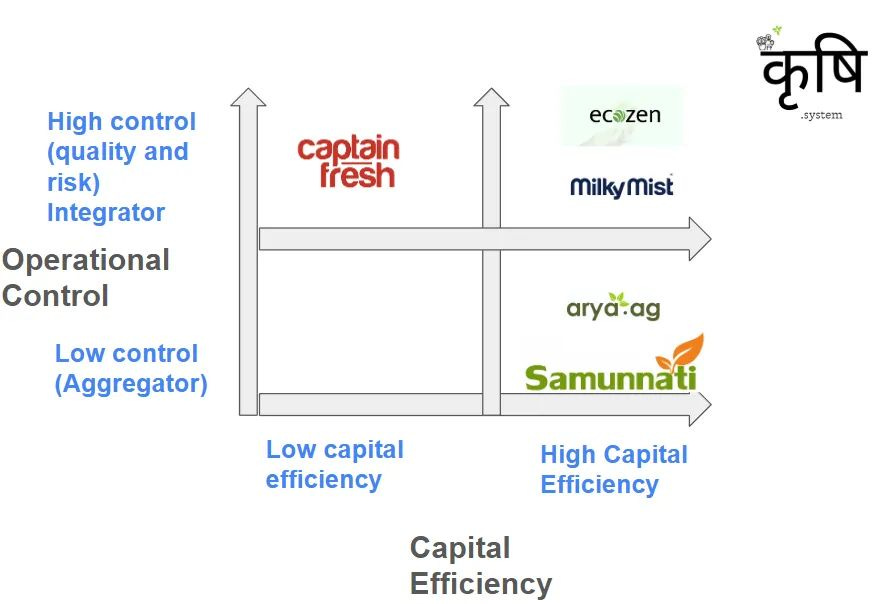
More on the analysis and detailed exploration of the 2x2 in a recent edition of Krishi.System. I wrote a follow-up on 5th January 2026 in the context of Captain Fresh withdrawing IPO Papers and Arya.Ag raising Series-D.
A Visit to Center for Indian Knowledge Systems
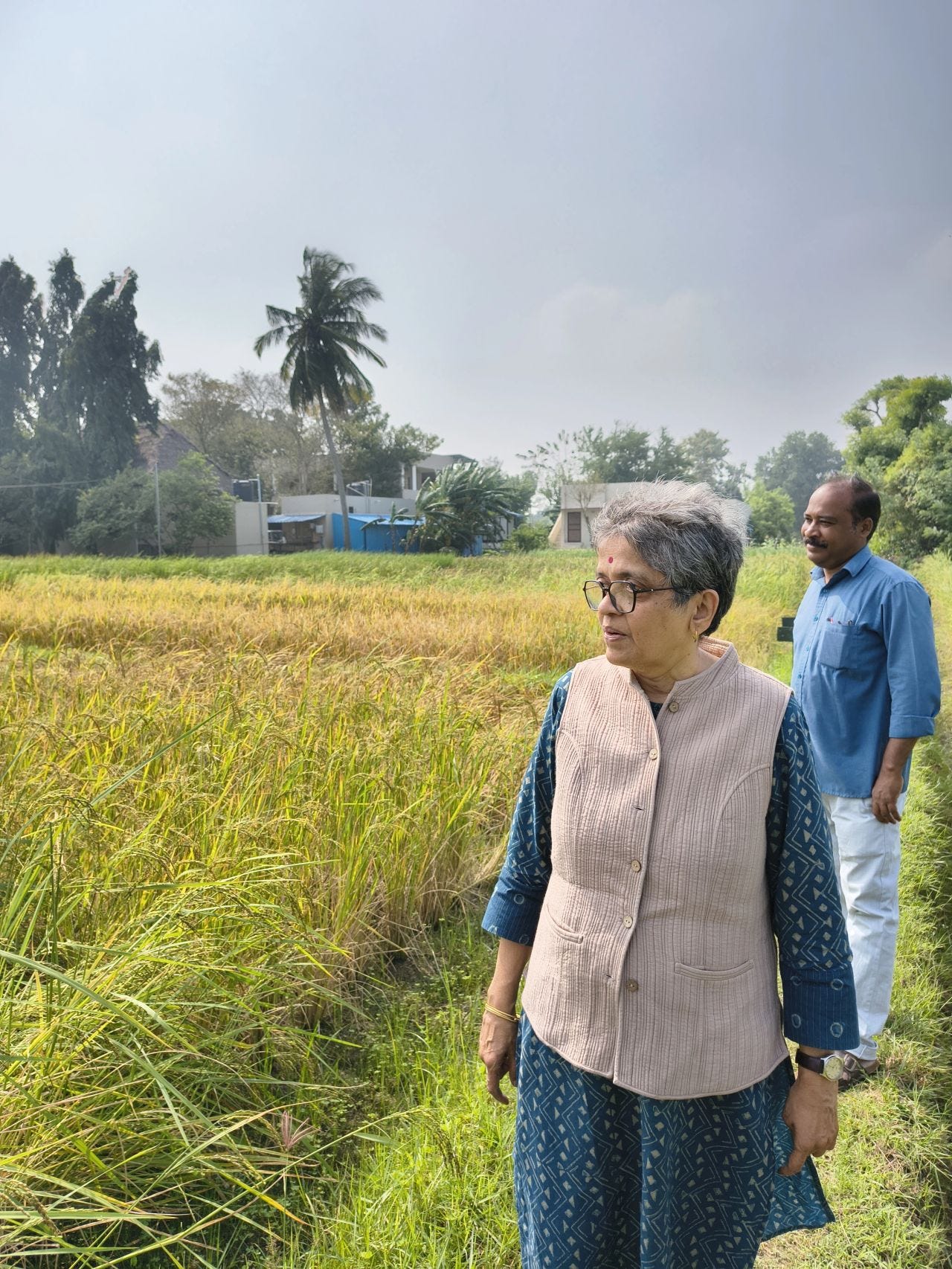
Few days ago, I had the privilege of spending a day at the Center for Indian Knowledge Systems which has been conserving and productizing 171 traditional rice varieties and 30 vegetable varieties of Tamizhnadu.
Almost every VIP who visits India and Tamizhnadu (including Modi) takes home their gift box. For their work touches the core pride of India and her knowledge systems that is still waiting to discover its highest potential after seventy seven years of political independence.
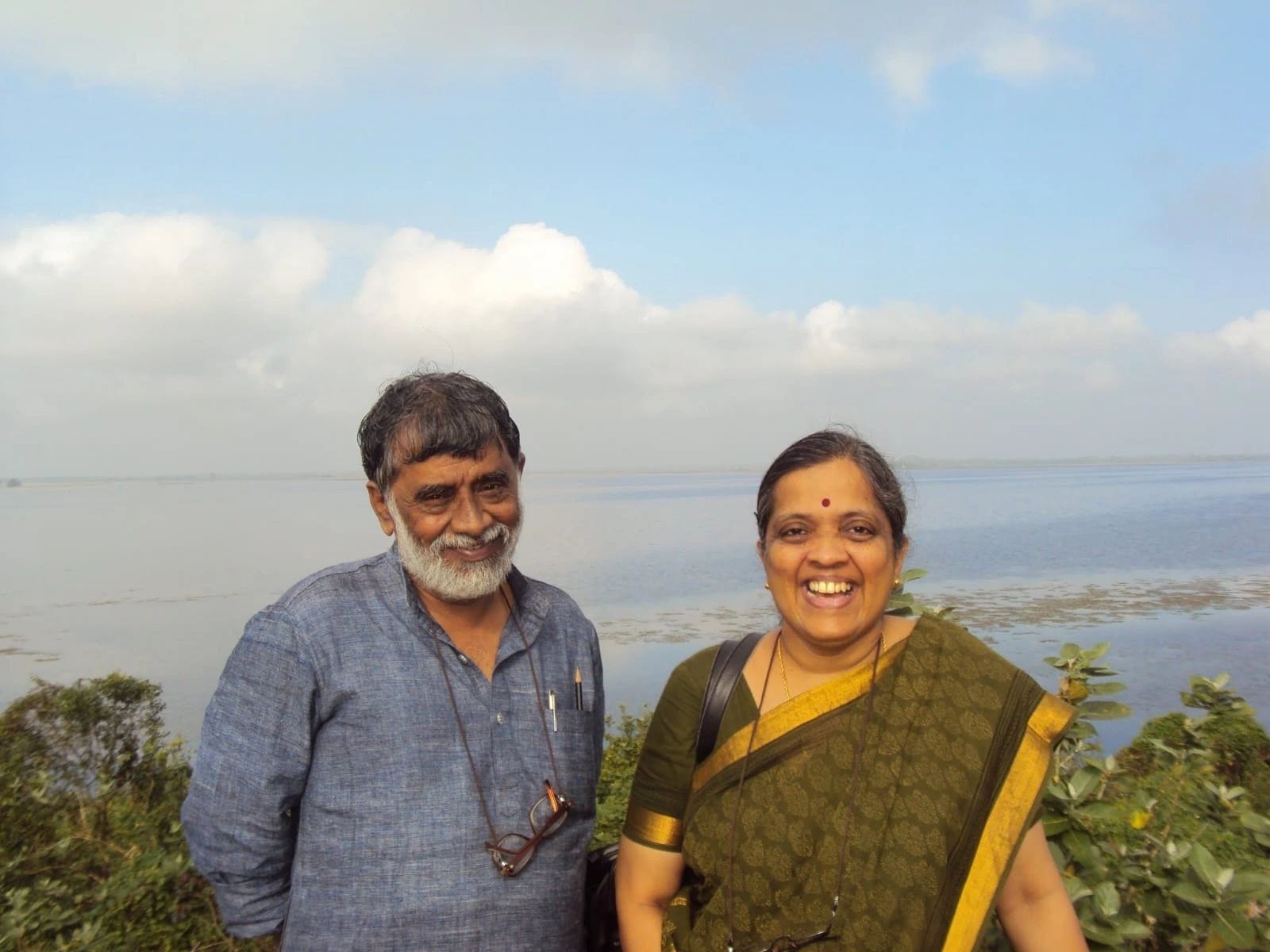
The Center for Indian Knowledge Systems was born in 1995 when Balu quit his Ph.D in molecular biology in the US and came back to India. Viji was doing her Ph.D in the use of spiders as biocontrol agents.
This was much before Indian Knowledge systems (IKS) became vogue in IITs. They researched Vriksha Ayurveda much before agricultural universities took it seriously. They still don't. They began conserving traditional varieties when Green Revolution's high-yielding varieties were considered unquestionable progress.
Today, when most IKS approaches attempt to seek validation from western knowledge systems, it was deeply humbling to listen to this amazing couple share their fascinating journey, conducting field trials and lab studies of bio pesticides that were formulated from Vriksha Ayurveda.
They helped build 22 farmer producer organisations across 9 districts with 33000 shareholders (42% women), converted 10000 hectares into organic cultivation, conducted more than 5k farmer training, published 200 publications in six languages, with 200000 copies that have been disseminated in India and 37 countries.
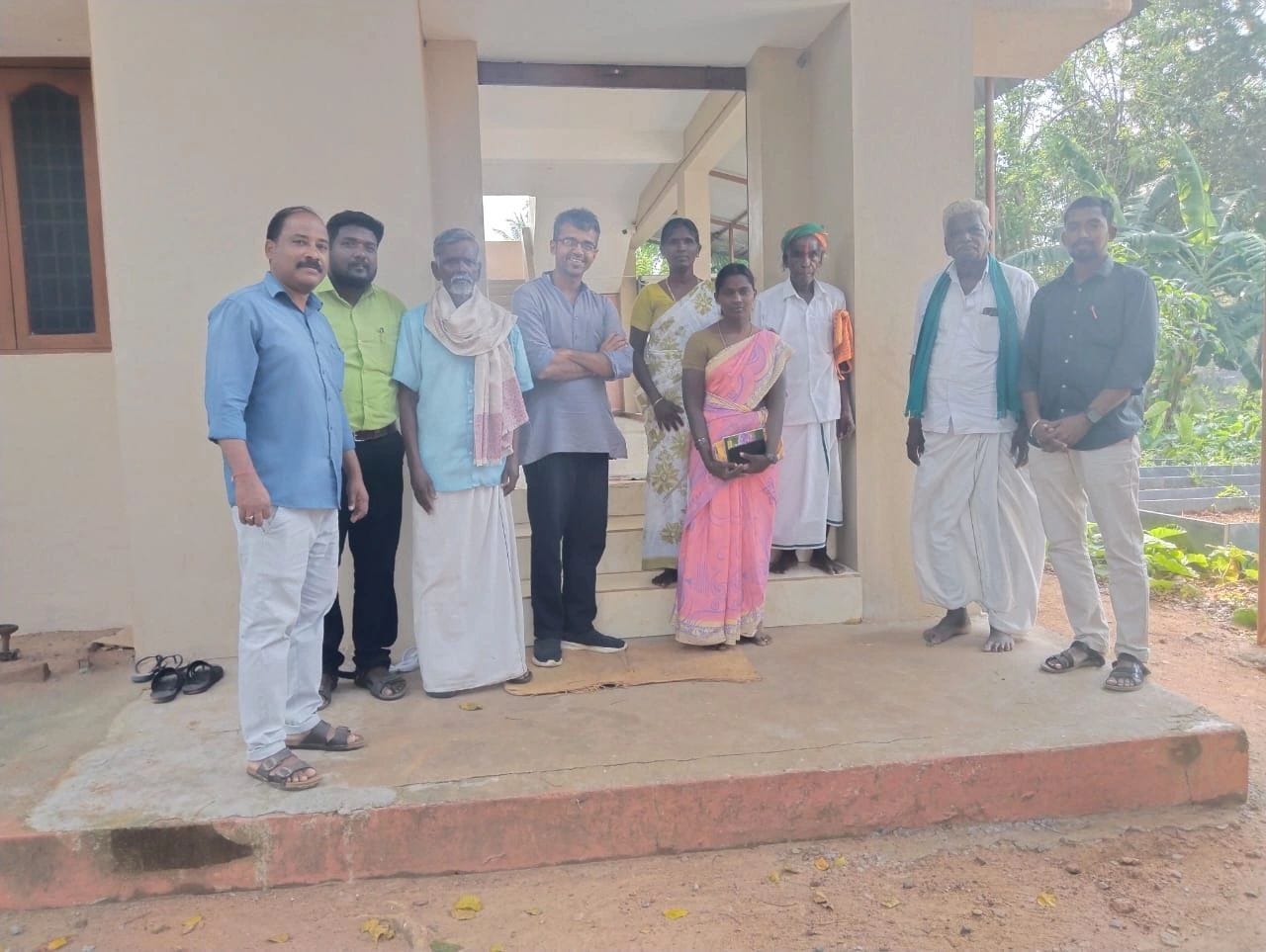
With a twenty five member team, they operate at every node from seed conservation to sustainable organic cultivation packages to biopesticide production units to soil testing labs and processing infrastructure and finally market linkage units.
And they did this while navigating, what Balu candidly says, "fits and starts" with government programs and "no long term linkages" with universities and research institutions.
That's the unsexy part of pioneering. You're building the proof of the pudding, much before people learn to appreciate its taste.
Today, IKS is in National Education Policy. Traditional rice varieties like Karuppu kavuni command premium prices. Organic is mainstream vocabulary.
Do we even have the right Impact metrics to measure ecosystemic impact? Standard impact metrics viz, measuring smallholder farmer incomes, fall short in truly evaluating their inter generational work.
CIKS is not content with its past laurels.
They want to build a living museum on rice. They want to partner with biological companies that can take their vrikshayurved biopesticide formulations forward. They want to build small scale machinery for agriculture ; evolve business models for input units such as neem seed powder and neem soap. They want to do further research on therapeutic property of traditional rice varieties.
I hope to do my bit for this important cause
300ml for Vitality. 3 Litres for Mortality
In the data war rooms of Zepto, Swiggy Instamart, and Country Delight, the tender coconut is affectionately called as a "Hero SKU."
Despite being heavy and hard to stack, it is consistently the #1 item in the Fruit & Vegetable category. Country Delight even built a campaign around the "300ml promise", marketing it as the ultimate vessel of nature-derived hydration.
In many places, thanks to quick commerce boom, the tender coconut market is organizing itself based on the volume promise to feed to this urban wellness audience who now can make tender coconut a daily habit, an everyday subscription delivered to homes like a milk packet.
The essential point here is that in the city, we view tender coconut through the lens of Wellness.
But if you look at the agricultural history of Tamil Nadu, specifically the semi-arid, rainfed districts of Virudhunagar and Madurai, the "use case" for the tender coconut was terrifyingly different.
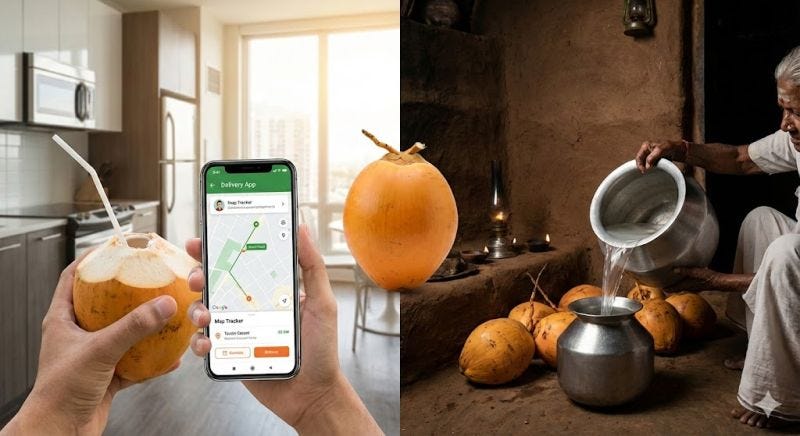
If you have watched the National Award-winning film Baaram, you might know about Thalaikoothal tradition.
It was a traditional practice of "organized euthanasia" or senicide, observed in communities that had no economic surplus to care for the terminally ill or the elderly.
The method relied on the exact same biological properties of tender coconut that quick commerce folks market to us:
The Cooling: An oil bath before dawn to drop body temperature.
The Potassium: Force-feeding liters of tender coconut water.
In a healthy body, that potassium regulates blood pressure. In a frail, hypothermic body, that massive influx causes Hyperkalemia—leading to renal failure and a silent cardiac arrest.
The same chemical compound (K+) that we pay a premium for to alkalize our bodies and live a healthy life can also be used to quietly end a "burdened life."
Every SKU in food and agribusiness carries a fascinating culture and history. When technology disrupts these traditions, what happens to the culture behind?
Invitation to Join Sixth Agripreneurs Retreat
There is not much of a difference between someone who runs an NGO in agriculture and some who runs an agribusiness enterprise.
No matter what your business model is structured as, you are essentially dealing with production risk underpinning farming and working in a sector that sits squarely at the intersection of samaaj (society) and sarkaar (government) and bazaar (market).
In my work at Krishi.System, I am encountering two archetypes:
1) Entrepreneurs who have built good businesses and are now hungry to create deeper impact that creates a legacy in the foot sands of history.
2) Entrepreneurs who have discovered the impact code and are now looking to make it financially sustainable to take their work forward.
The first kind often tend to be running agribusinesses and the second kind often tend to be running NGOs/Trusts. For the longest time, both of the kinds never interacted much with each other.
In my Agripreneur retreats, both the kinds come together and it's often incredible to watch their collaboration turns into a dance that rivals the joy Akshaye Khanna exudes when he shakes a leg in traditional Balochistan dance!

When for-profit and not-for-profit discover how their work complement each other, there is incredible joy in the air! They may be cut from different cloth. But they deeply sing and dance to the common underlying rhythm that drives the passion towards agriculture!
After hosting five successful retreats, We are gearing up for the sixth Agripreneurs Retreat exclusive for Regenerative agripreneurs in Bhopal.
Recently, during a social gathering, I met the wife of an agripreneur who had earlier done our agripreneurs retreat. She movingly shared how her husband became a whole new person after the retreat. In my mind, that's the ultimate benchmark we strive for.
Retreat spaces are regenerative spaces in the truest sense of the word. We have done agripreneur retreat in various parts of the country.
West - Nashik
East - Chilika Lake, Odisha
North - Jaipur
South - Bangalore and Coimbatore.
Many folks from central India have been asking us to host retreat there. And we are hosting it this time in Bhopal.
The challenges faced by agripreneurs are quite different from other founders. We are dealing with a sector that is slow to change for good and bad reasons. We are also dealing with a more diverse range of players and forces within and beyond our control.
Join us for the sixth Regenerative Agripreneurs Retreat in Bhopal. We are planning to invite forty agripreneurs. Applications invited. Do share details about how you are regenerating food and agriculture systems in the application form.
Dates: 19th - 20th - 21st February | Venue: Ratapani Jungle Lodge, Bhopal | Applications are welcome!
Learnings From Chennai Agripreneurs Meetup
Chennai Agripreneurs Meetup was a blast. We discussed ideology, politics and finance.
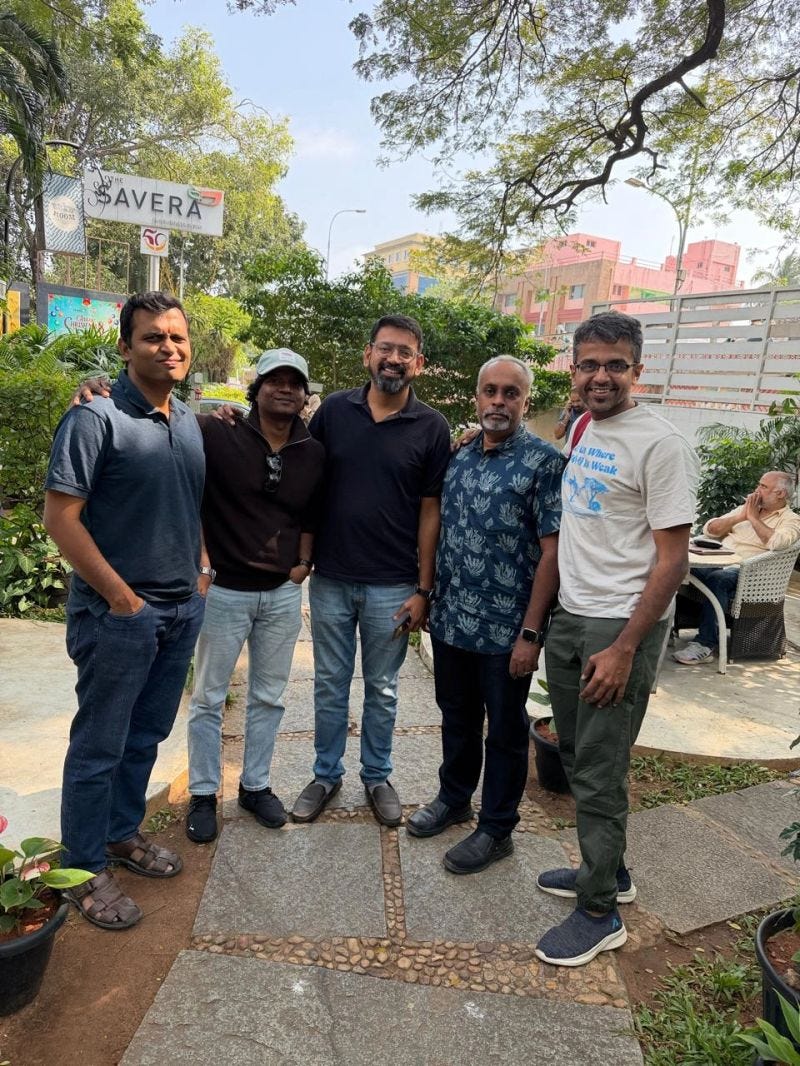
→Is specialization good or bad for small holding farmers? What are the tradeoffs when compared to diversification? which has higher chances of increasing incomes of small holding farmers?
→ Does specialization/ diversification break feudal traps? How do we break feudalism traps in rural India?
—> What is the psychology of venture capital? Which psychological stances improve the success of venture capital ? What is the ultimate play of debt in the life of entrepreneurs?
Next Agripreneur Meetup: Bangalore (23rd January) |R̥SVP here
So, what do you think?
How happy are you with today’s edition? I would love to get your candid feedback. Your feedback will be anonymous. Two questions. 1 Minute. Thanks.🙏
💗 If you like “Krishi.System”, please click on Like at the bottom and share it with your friend.