
Sunday Reflections (Amazon Carbon Credits, Monash University Paper on Climate Change)


Dear Friends,
Greetings from Hyderabad, India. Welcome to Sunday Reflections where I reflect on what I’ve written and ask myself, In doing what I am doing, what am I really doing?
If you don’t want CC hassles, you are most welcome to use paypal or UPI (venkat.raman.kr@icici) and pay the annual subscription (8500 INR/95 USD) with your email in the comment. I will enable access immediately.
P.S. Supporting this work doesn’t have to come out of your pocket. If you read this as part of your professional development, you can use this email template to request reimbursement for your subscription.

Subscriber-only Post Trailers
Decoding Fragaria’s and Oishii’s Vertical Farming Thesis
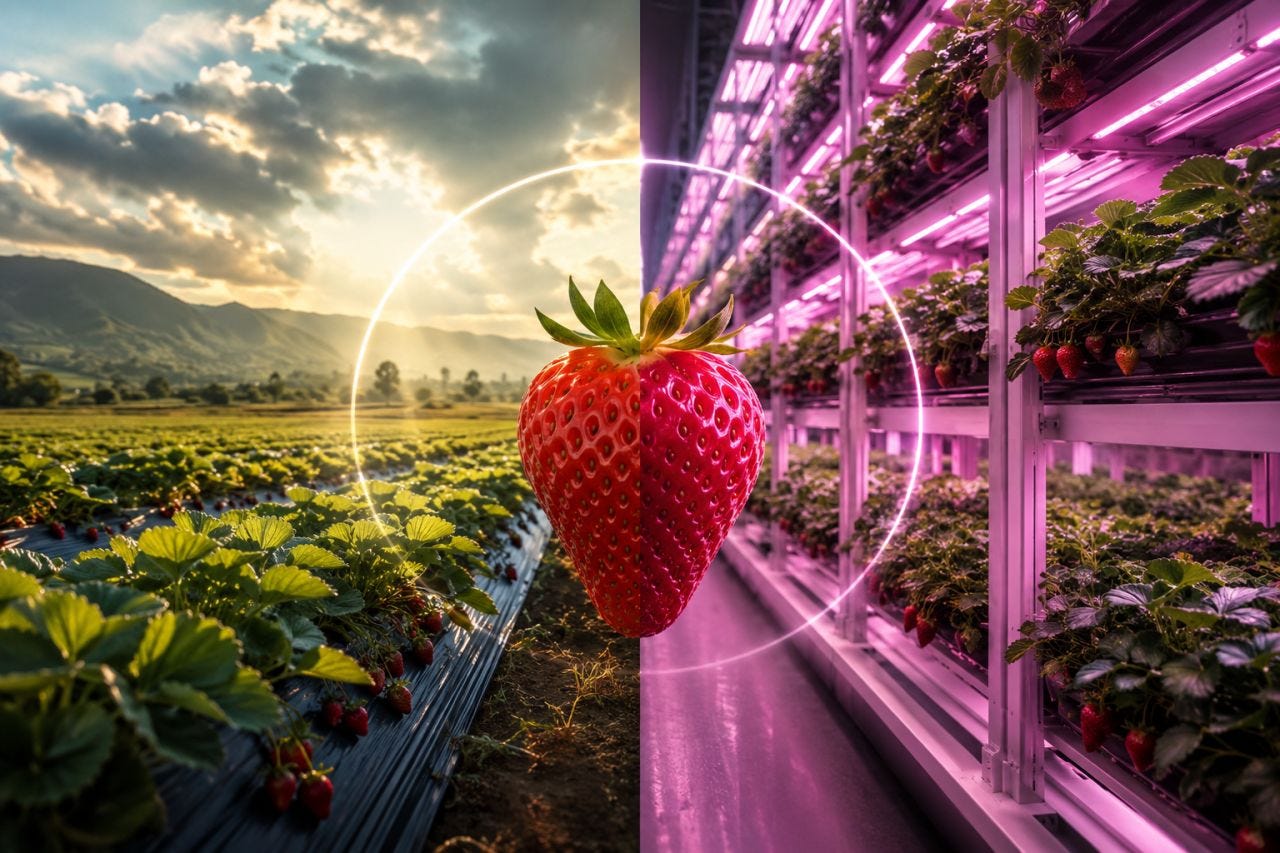
Amidst a graveyard of vertical farming failures, how to make sense of Fragaria’s and Oishii’s thesis? Is it time to revisit my bearish outlook on vertical farming?
Plenty raised $940 million and went bankrupt in March 2025. Bowery raised $700 million and shut down in November 2024. AeroFarms, AppHarvest, Fifth Season, Kalera, Agricool, Infarms — fourteen controlled-environment agriculture companies filed for bankruptcy in 2025 alone. Combined burn across the graveyard sits north of $3 billion.
I’ll be honest.
I have been bearish about vertical farming thesis as it is blind to energy costs and relies too much on arbitrage gameplay.
Vertical farming was sold to venture capital as a technology bet when it has always been a price-arbitrage bet. The arbitrage exists only where field agriculture structurally cannot compete — through seasonality, geography, or freshness decay.
I put the obvious question to Harish Varadharajan of Fragaria Fruits: “Don’t your strawberries compete with open-field produce?”
“Only 3 months a year. Even in that time, since our products travel less from farm to customer, we are able to harvest late, resulting in better sweetness compared to Mahabaleshwar.”
For nine months of the Indian calendar, the field is empty. Indian per-capita berry consumption sits at 0.25 kg against 2–3 kg in China — an 8–12x demand vacuum that exists because no domestic supply meets year-round need.
But what about the high production costs?
More in a recent subscriber-only edition of Krishi.System.
P.S. I received interesting comments from agripreneur friends on vertical farming production costs.
1. 16000 sqft is approx .36 acres.
2. 1465 sq mtr and assuming 2.5 meter vertical space comes to total of 3650 total vertical production area. Now multiply 100 USD x 3650 comes to Rs 3.25 cr capex.
~~
“Vertical farming unit economy is very important, as long as it supports that you can do. personally our experience with vertical farm (especially in chennai climate) was a failure story due to unit of economy”
~~
“With all the headlines about Driscolls and pesticides, the opportunity is to sell a better/cleaner product, but one with proper (and regular) independent testing that's available to the public.”
Wingreens Picks Safe Harvest
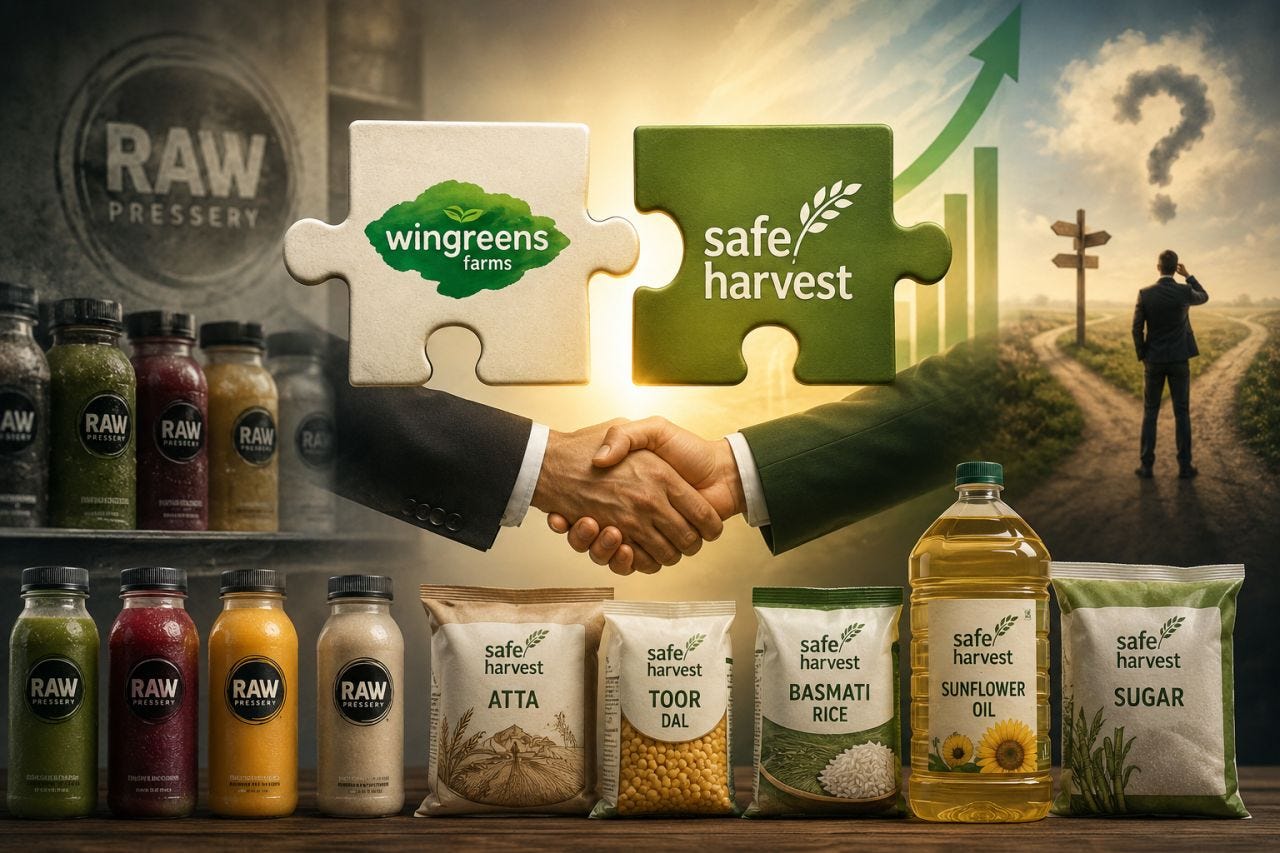
Why did Wingreens acquire Safe Harvest? Would Safe Harvest follow the same trajectory Raw Pressery did when it was acquired by Wingreens in 2021? Although it is pointless, what could have Safe Harvest done differently?
In March 2021, Wingreens acquired Raw Pressery at ₹100 crore. One fifth of its prior ₹500 crore post-money valuation. Raw Pressery had burned through roughly $150 million. Wingreens absorbed it as Sequoia Capital sat on both cap tables and could orchestrate the portfolio transfer.
Five years on, Raw Pressery exists as a sub-brand inside Wingreens with the original premium-positioning DNA muted, jostling for shelf space against mainstream juices.
Will Safe Harvest follow the same trajectory?
Lead investor and prime mover Ashish Kacholia’s mechanics is interesting.
He held Safe Harvest as a standalone HNI bet. By rolling that into Wingreens equity through the swap and leading the Series D, he is doing a value-transfer manoeuvre.
Safe Harvest’s journey, transitioning from a social enterprise that was incubated by eight civil society organizations in 2009 to its current form is fascinating.
Safe Harvest's portfolio is dominated by staples — atta, dal, rice, oils, sugar.
Indian consumer behavior in staples is brutally price-sensitive. Aashirvaad, Tata Sampann, Fortune, Patanjali compete on 3–8% gross margins at the brand level with massive volume offsets.
What are the assets Wingreens is buying? What could have Safe Harvest done differently?
More in a subscriber-only edition of Krishi.System
Double-clicking on Amazon’s $30 million deal to buy carbon credits from Indian rice farmers
Amazon bought $30 million worth of Indian carbon credits without using India’s carbon market. Why are Indian farmers not a counterparty to this deal? What about additionality paradox? Can it be resolved?
The compliance market that India launched in 2023 does not cover agriculture.
The voluntary market for rice methane invalidated almost 99.9 percent of its credits last year over additionality concerns.
So Amazon funded a Bayer-led consortium, The Good Rice Alliance to enroll 13,000 rice farmers, train them, measure their methane, and aggregate the credits into a private supply chain.
India's own draft Carbon Credit Trading Scheme and the Article 6 architecture didn’t mediate this transaction.
The 35,000 hectares the deal covers represent less than one-tenth of one percent of India's 44 million hectares under rice. At $30M / 685,000 credits, the implied price is roughly $43.80 per tCO2e.
More in a subscriber-only edition of Krishi.System
___
P.S. I received several fascinating comments.
Banashree Thapa wrote,
“Dear Venky,
Thanks for this post and surfacing some suspicious angles with the whole Amazon deal. I want to highlight a few points on the above though:
1. 99% of the credits were invalidated would not be the most appropiate way to describe the issue. Verra scrapped off one AWD methodology; and 99% of the projects under it were from China. The methodology itself was suspicious; which is why it should have never passed through Verra's screening; but now that Verra is under increasing pressure to clean up its methodologies, the AWD one came under the review.
This is not to say that AWD's methane avoidance is necessarily isnt of merit through creation of robust methodologies.
2. On the farmers not being "counterparty" to the deal, I would love to understand what you mean here, since by your calculation 43.80USD/ton is not on the lower end of what carbon credits sell for (currently). If the farmers can continue to get similar prices (adjusted for inflation) for the remainder of the project duration, I would see that as one win for scaling SRC in India, while the policy case for it and the demand for it gathers momentum. The overall deal being done by non-Indian entities + agri-conglomerates should be rightly questioned.”
3. Additionally, India does not trade land-based mitigation credits under Article 6.4 and is reserving those deals for capex heavy sectors; hence why this deal couldn’t have gone through Article 6 mechanisms. On the CCTS front, one counter-argument they could make is: that domestic market wasnt ready yet, which is valid. But will be interesting to see how India responds to such large deals once its registry and governance frameworks are set up. Indonesia put a moratorium on call carbon trading by non-domestic parties 4-5 years back and asked every project developer to be registered in the domestic registry; which is something India could do as well.
Hasibur Rahman wrote:
“Bangladesh has been running AWD pilots since 2004. After twenty-two years, adoption remains under 8% concentrated almost entirely in project zones. That is not a science failure. It is a structural one: land fragmentation, pump owner control of water scheduling, fish income loss from drained fields. Individual farmers cannot implement AWD even if they want to.
The cooperative model changes the additionality calculus entirely. When a cooperative adopts AWD as a block, the practice change is verifiable, the MRV is manageable, and farmers become genuine counterparties not passive beneficiaries of a private supply chain. When the cooperative is the registered entity in the carbon agreement, farmers are genuine counterparties with governance rights. The cooperative secretary maintains records for MRV compliance. The cooperative receives and distributes payment. The cooperative can exit if terms are not met.
I am working in the Barind Tract in northwest Bangladesh: Rajshahi, Chapai Nawabganj, Naogaon, Dinajpur. Groundwater declines 0.3 to 1.0 metres per year. The Barind Multipurpose Development Authority controls irrigation scheduling across the entire region, which solves the pump owner problem at the institutional level. ADB and IRRI already have baseline data here. Cooperative structures exist through RDRS and COAST Foundation.
I am building the five-layer deal structure: international buyer, carbon developer, country advisor (my role), NGO farmer aggregator, and cooperative farmer blocks. The same architecture the Amazon India deal used, adapted for Bangladesh’s specific land and water constraints.”
Danny Levy wrote,
“The additionality problem will keep recurring as long as MRV frameworks only measure what is easy to count. The biological contribution to soil carbon mycorrhizal networks, aggregate formation, root mass rarely appears in these accounting systems. Until it does, rice programs will keep chasing methane because it is the only signal the market knows how to verify. The measurement gap is the policy gap.”
When Climate-Resilient Crop becomes the most Climate-Vulnerable Crop
A new study covering 51 years and 563 districts has just published the most rigorous estimate yet of what climate change is doing to Indian agriculture. Which crop lost the most yield to a 1°C rise in temperature? Not rice, wheat or maize. Pearl millet.
A new paper ran its own econometric estimation on 51 years of district-level data (1966 to 2016, 563 districts, ten crops) and benchmarked the results against 30 reference studies covering India and the global literature from 2007 to 2025.
The results led to an uncomfortable truth that most of us with ears on the ground are familiar with: Most of the existing literature on India systematically underestimates climate damage to agriculture, sometimes by a factor of two or more.
The table the authors present with long-run impacts on crop yields, showcasing percentage change corresponding to a 20% decrease in rainfall and a 1◦C increase in temperature is fascinating for many reasons.
For starters, It inverts the entire millet climate resilient story on its head.
Pearl millet, the crop being promoted across the country through the Shree Anna Mission as the climate-resilient future of Indian agriculture, is the most temperature-vulnerable crop in the entire dataset.
A 1°C rise in temperature reduces its national-average yield by 19.1%. In the worst-affected districts, the loss climbs to 38.5%. Sorghum, the other promoted millet, takes the largest yield hit from a 20% rainfall shortfall: 14.1%. Two crops being promoted as climate adaptation sit at the top of the climate-vulnerability table.
The study is deeply counter-intuitive when it comes to Wheat.
Wheat is often described as water-thirsty and unsustainable and yet it comes out as one of the most resilient crops in the study.
A 1°C warming cuts wheat yields by just 5.4%. Why is this the case ? Punjab, Haryana, western Uttar Pradesh. Districts with deep irrigation cover, canal networks, tube wells. When the monsoon misbehaves, the infrastructure absorbs the shock before it reaches the plant.
Sugarcane shows the same pattern, with rainfall vulnerability of just 1.7%, the lowest of any crop, because almost all of it sits on irrigated land.
More in a recent subscriber-only edition of Krishi.System
I received several comments, critiquing the paper’s methodology. Here is a comprehensive view based on how I understand the criticism.
A Critique of Monash University Paper
Navigating the weeds of the methodological debate of this paper has been interesting. Broadly speaking, I am hearing three forms of criticism
Real resilience lives at the cropping-system level (LER, polycropping, soil biology, household food security variance) rather than at the single-crop yield level.
The paper doesn't model India's near-doubling of net irrigated area over 1966-2016 or the deeply unequal distribution of that expansion across the 563 districts
Is it possible to study resilience through time series study across the country without taking into account to the district soil types ,irrigation?
Let’s look at the first.
Most LER studies in cereal-legume systems report values of 1.2 to 1.4. In simple terms, Intercropped sorghum-pigeonpea, maize-cowpea, or wheat-lentil systems produce 20 to 40% more food per hectare than monocrop equivalents.
Let’s break down LER.
LER measures the land-saving power of intercropping. Take sorghum and pigeonpea.
Grow them separately on two equal pieces of land, and they give you a combined harvest of X. Grow them together on a single piece of land of the same size, and they typically give you 1.2 to 1.4 times X. The single field has done the work of 1.2 to 1.4 fields.
How does this happen ? Resource complementarity. Sorghum has shallow roots and a short canopy. Pigeonpea has deep taproots and a tall canopy. The two crops draw water from different soil depths, capture sunlight at different heights, and need nitrogen at different times. Pigeonpea fixes nitrogen into the soil that sorghum then uses. The crops share resource niches rather than compete for them.
This produces climate resilience. When a rainfall deficit hits, pigeonpea’s deep roots reach water that sorghum’s shallow roots can’t. When the early monsoon fails, pigeonpea’s late maturation gives the system a second chance at a harvest. The mixture has built-in redundancy. One crop fails, the other catches some of the loss.
Monoculture cannot do this by design.
This is the documented agronomic reality of a significant portion of Indian smallholder agriculture, particularly in the very regions the Monash paper identifies as climate-vulnerable: the Eastern Plateau, the Western Dry Region, the Southern Plateau.
If a sorghum-pigeonpea Adivasi farmer in Bolangir loses 14% of sorghum yield in a rainfall-deficit year but the pigeonpea catches some of the loss because it's drought-tolerant and matures later, the household-level food security shock is smaller than the sorghum-only measurement suggests.
This paper measures monocrop yields one crop at a time and aggregates them with crop-weights from the All-India Agricultural Production Index. The architecture of intercropping is invisible to that measurement frame.
When the paper says pearl millet loses 19% of yield to a 1°C warming, the true household-level food security impact for a farmer practicing bajra-moth bean-cluster bean poly-cropping in Rajasthan is almost certainly smaller.
Now the second.
India's net irrigated area roughly doubled between 1966 and 2016, the same window the Monash paper studies. That expansion wasn't uniform. Punjab and Haryana started high and stayed high. Eastern UP, parts of Madhya Pradesh, parts of Karnataka saw substantial growth. Some rainfed districts barely changed.
This matters because every yield observation in the paper has two competing explanations. Was yield high because the climate was kind that year? Or was it high because the field had irrigation, and irrigation absorbed the climate shock before it reached the plant? The paper doesn't distinguish between these two explanations.
When the data shows that the Indo-Gangetic wheat belt is "climate resilient," part of that signal is the canal network, the tube wells, and the electricity subsidies for groundwater pumping that intercept the climate shock before it reaches the wheat.
Strip those away and the wheat belt would look different.
Pearl millet's apparent vulnerability has less to do with the seed being fragile and more to do with the regions where pearl millet is grown never having received the buffering infrastructure the wheat belt got.
Now the third
Can you study climate resilience at all through a country-wide time series, without modelling the district-level differences in soil, irrigation, variety adoption, and input use that everyone agrees matter?
Obviously yes, with bounded conclusions.
Given each district's actual cropping pattern, actual input use, actual irrigation, and actual variety adoption at any given moment, how does monocrop yield respond to climate anomalies relative to that district's own long-period normal? That is a useful question. The answer the paper provides is methodologically defensible.
The right way to read this paper is as a measurement of climate sensitivity conditional on the actual structure of Indian agriculture during the study period, rather than as a measurement of the crop in isolation or a forecast of what climate sensitivity will look like under different adaptation pathways.
The paper cannot answer the following questions.
How much would climate damage shrink if India invested in irrigation expansion in rainfed districts? How much would it shrink if farmers shifted from monocropping to LER-1.4 polycropping? How much would soil organic carbon restoration buffer the temperature effect?
To sum it up, The Monash paper measures one slice of the climate-agriculture relationship, with clear blind spots about the other slices. The slice it measures well is monocrop yield sensitivity to climate anomalies, holding everything else fixed at its actual historical structure.
The slices it doesn't measure (cropping-system architecture, irrigation-expansion buffering, variety and input dynamics, household food security variance) reflect the limits of an agricultural data system built to track monocrop production for procurement rather than resilience for survival.
The agricultural data system itself, ICRISAT-TCI for crop output, IMD for climate, the Directorate of Economics and Statistics for area and production, was built to track monocrop production for MSP procurement, food grain availability calculations, and Green Revolution productivity claims.
The data system cannot see LER, soil organic carbon trends, household food security variance, or system buffering capacity, because those were not the metrics the post-Independence agricultural state organised itself to optimize.
A real shift needs us to introspect on the data system we have built.
Hyderabad and Bengaluru Agripreneurs Meet
Hyderabad Agripreneurs Meet and Bangalore Agripreneurs Meet were such a delight.
Friends showed up. And the conversations were genuine, deep and explored all the essential nine rasas of agripreneurship.
Acquaintances showed up to regale us with fascinating back stories on . And very quickly, felt at ease to join the web of conversations.
I was happy to meet Narendranath Reddy Vaishali Neotia Navya Kiran and other new folks who joined us at Hyderabad Agripreneurs Meet.
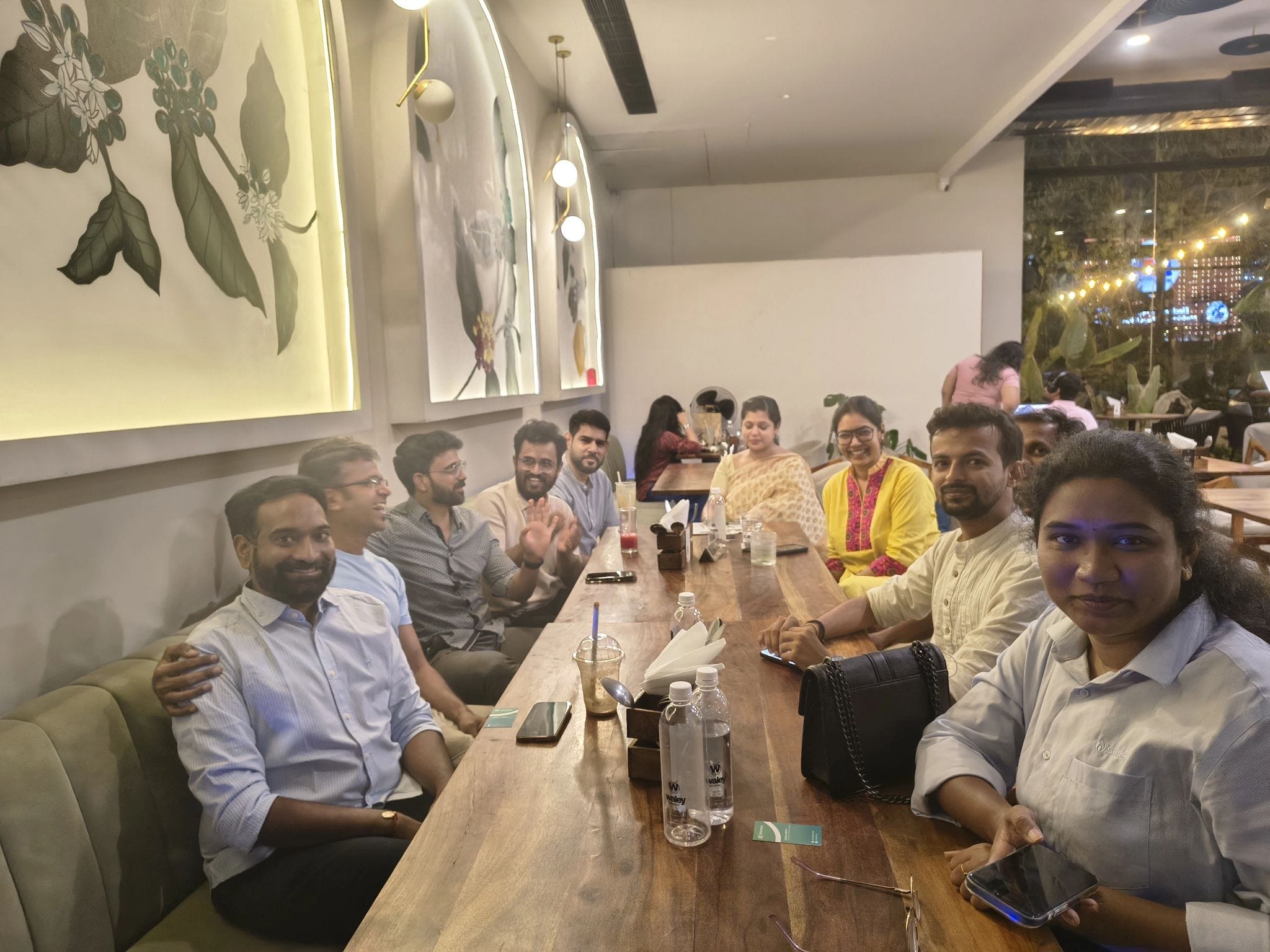
It was a delight to see and hear the birth of Defacto india from Shreyasi Agarwal.
It was lovely to hear about the sand bio inputs innovations of Chintala venkat Reddy and the work done by Palle Srujana
Bangalore Agripreneurs Meet ended up exploring a lot of dairy related threads and we also explored some of the fascinating developments in securitization of receivables with Chiru.
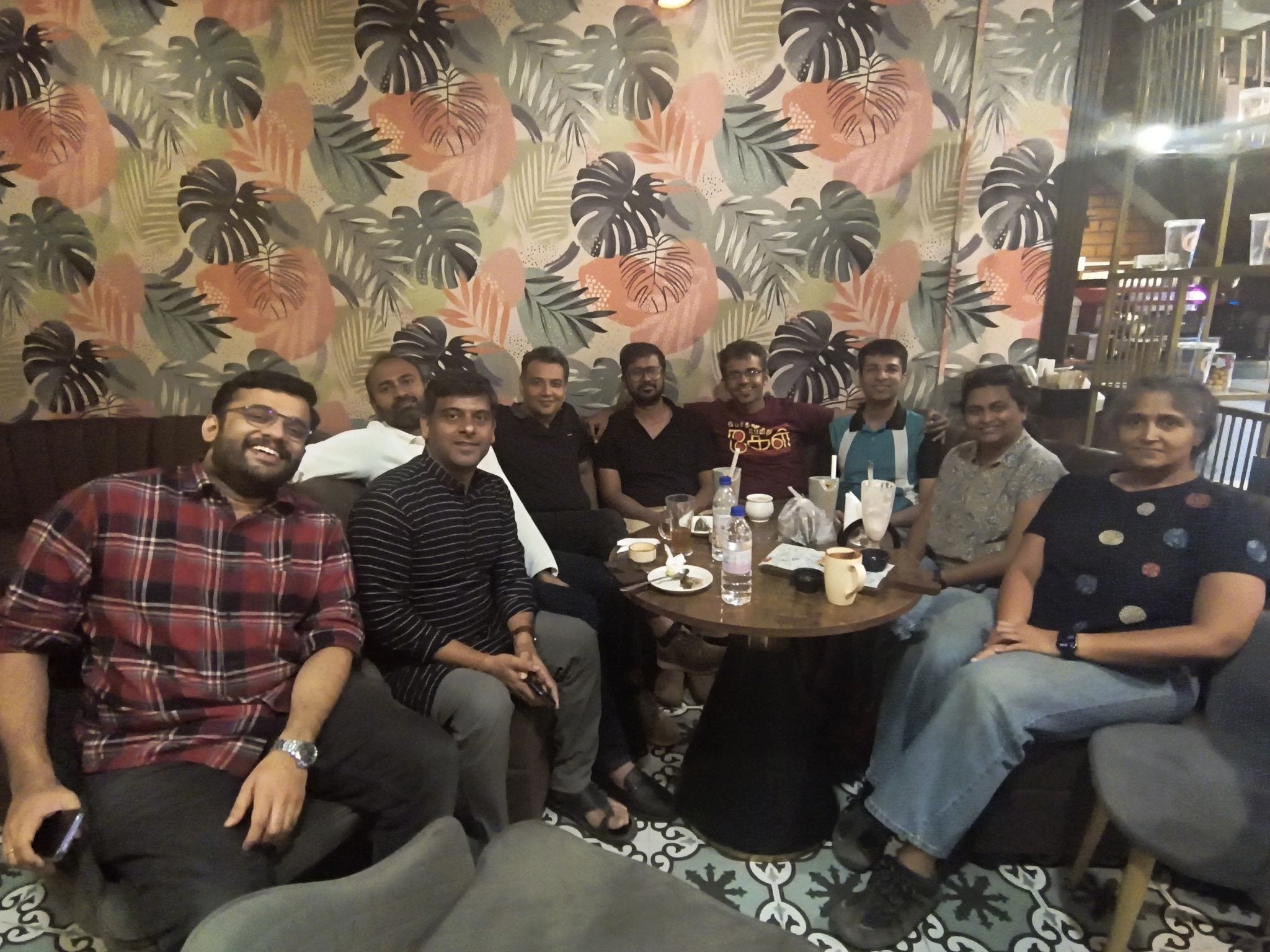
Thanks to Gaurav Haran, we explored the market of Lactalis and how the dairy is quietly changing in this country. Thanks to Prachur Goel, we explored rural India's reels culture and how tribal languages have found a new lease of cultural life, thanks to Instagram reels.
Kishore Reddy PV shared his misfit thesis and Vivekanand Tiwari shared his bhojpuri roots and his fascinating journey from Israel to India. Thanks Vinay Menon Vishala, Preethy. Kishore, Raghu, Vamsi, Ramakrishna and other friends who took trouble to join us from afar.
So, what do you think?
How happy are you with today’s edition? I would love to get your candid feedback. Your feedback will be anonymous. Two questions. 1 Minute. Thanks.🙏
💗 If you like “Krishi.System”, please click on Like at the bottom and share it with your friend
Love the effort! Thank you so much for explaining fragraria.
CC issues, making an UPI payment ..pls provide access to souravanand619@gmail.com